The Returner Flywheel: How Continuity Compounds Value
Returning staff create stability, culture, and efficiency that compound over time. Learn why continuity matters and what camps lose when experienced returners don’t come back.
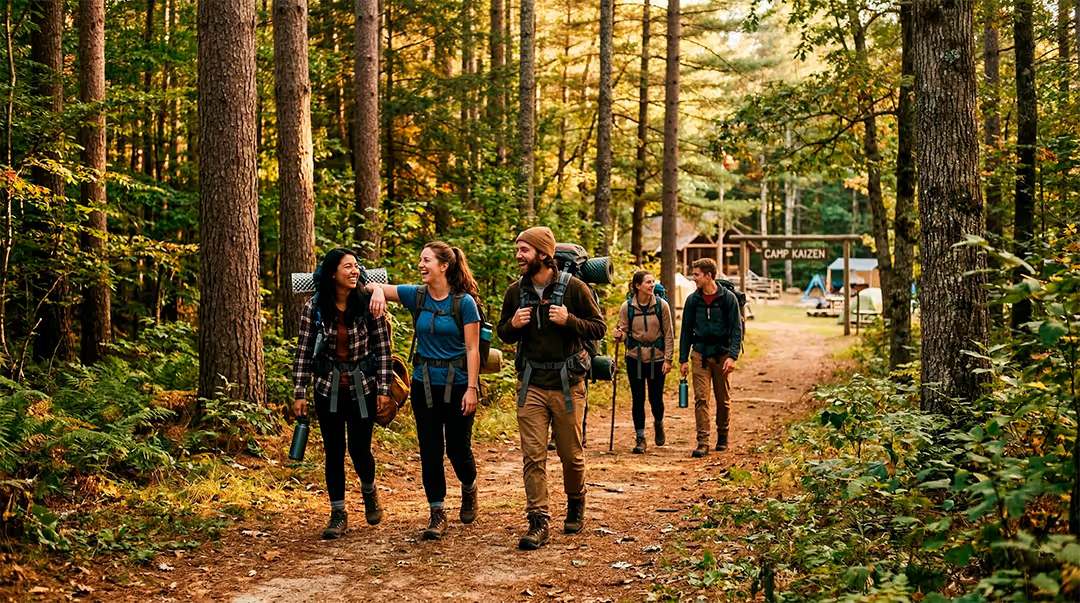
Returning staff do more than fill roles. They carry context, relationships, and shared experience that shape how a camp actually functions day to day. Over time, their presence creates a sense of continuity that newcomers instinctively rely on, even when it’s never formally defined.
When familiar faces return, expectations are clearer, trust forms faster, and leadership doesn’t need to rebuild foundations from scratch. Small efficiencies add up. Culture feels steadier. The season moves with less friction.
This article explores how returning staff create compounding value over multiple seasons, why continuity acts as a stabilizing force for culture and operations, and what camps risk losing when that flywheel quietly breaks.
The Power of Returners
- Institutional memory that can’t be documented
Returning staff carry knowledge that never makes it into handbooks. They remember how things actually work, how problems were handled before, and what matters in practice. That lived context reduces friction and prevents teams from relearning the same lessons each season. - Faster alignment with expectations and standards
Veterans don’t need extensive orientation to understand expectations. They already know the pace, tone, and standards of the camp. That alignment helps teams move quickly and creates a more stable environment for both new staff and campers. - Stability that ripples across teams
A core group of returners anchors the season. Their presence creates predictability, reassures new staff, and reduces uncertainty across departments. Stability isn’t confined to individual roles, it spreads through the entire operation.
Why Continuity Is a Leadership Asset
- Less onboarding, fewer explanations
When experienced staff return, leaders spend less time repeating basics. Processes, expectations, and routines are already understood. That reduction in onboarding effort frees leadership from constant clarification and allows focus to shift toward higher-value decisions. - Shared understanding without constant direction
Returners operate with an implicit understanding of how things are done. Leaders don’t need to micromanage or restate norms. That shared context creates smoother coordination and reduces the cognitive load of supervising every detail. - Leadership energy redirected from basics to growth
With continuity in place, leadership can invest energy in improving programs rather than maintaining foundations. Time once spent reinforcing fundamentals is redirected toward mentorship, innovation, and strengthening the overall camp experience.
Culture Sustained Through Familiar Faces
- Values modeled, not explained
Camp culture is absorbed through behavior more than instruction. Returning staff demonstrate how values show up in daily interactions, decisions, and routines. New staff learn what matters by watching how veterans act, not by reading a document. - Traditions preserved through behavior
Many traditions live in small, repeated actions. Returning staff carry those practices forward naturally, maintaining continuity without formal reinforcement. When familiar faces return, traditions stay alive through doing, not explaining. - Consistency that builds trust with campers and families
Familiar staff create a sense of reliability. Campers recognize faces, families feel reassured, and expectations remain consistent year to year. That continuity strengthens trust and reinforces the camp’s identity beyond any single season.
Mentorship That Emerges Naturally
- Peer guidance without formal roles
Returning staff often mentor without being assigned the role. They answer questions, model behavior, and step in instinctively. This informal guidance fills gaps that formal training can’t always anticipate, especially in fast-moving, real-world situations. - New staff learning through proximity
Much of what new staff learn happens through observation. Working alongside experienced returners accelerates learning, reduces mistakes, and builds confidence faster than instruction alone. Proximity turns experience into a shared resource. - Leadership multiplied, not centralized
When veterans support others, leadership spreads organically. Directors aren’t the sole source of guidance. Responsibility is distributed, creating a stronger, more resilient team structure that doesn’t rely on constant top-down direction.
The Compounding Value of Familiarity
- Faster decision-making and execution
When teams share context, decisions move faster. Returning staff understand priorities, constraints, and expectations without lengthy discussion. That shared understanding reduces back-and-forth and allows teams to act decisively, even in situations that would slow down a less familiar group. - Fewer errors from learned context
Experience reduces avoidable mistakes. Returners recognize patterns, anticipate issues, and know where problems typically arise. That learned context prevents small errors from compounding and saves time that would otherwise be spent correcting avoidable missteps. - Operational smoothness that compounds over time
Each returning season builds on the last. Processes feel smoother not because they change, but because people know them. Over multiple seasons, that familiarity compounds into efficiency that’s hard to replicate through documentation alone.
What Breaks When Continuity Falters
- Relearning the same lessons every season
When experienced staff don’t return, teams are forced to relearn basics that were already solved before. Time is spent rediscovering processes, norms, and workarounds instead of building on prior progress, slowing momentum from the very start. - Cultural dilution and inconsistency
Without familiar faces, culture becomes harder to sustain. Values are explained instead of modeled, traditions lose clarity, and expectations vary by person. Over time, that inconsistency weakens the shared identity that holds teams together. - Increased strain on leadership and systems
When continuity breaks, more responsibility shifts back to leadership. Directors fill gaps in guidance, oversight, and problem-solving, increasing cognitive and emotional load. Systems are stretched to compensate for the absence of experienced anchors.
Why Continuity Requires Intentional Visibility
- Early insight into who is likely to return
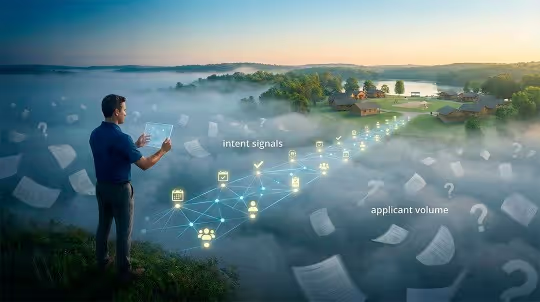
Continuity doesn’t fail all at once. It weakens when leaders lack early insight into which returners are stable and which are uncertain. Without visibility, risk goes unnoticed until key anchors are already gone or alternatives are limited. - Understanding risk before continuity breaks
Knowing who might not return is as important as knowing who will. Visibility allows leaders to see where continuity is fragile and act early, instead of assuming stability and reacting only after gaps appear. - Planning built around real signals, not hope
Protecting continuity requires planning based on signals, not optimism. When intent is visible early, camps can reinforce the returner flywheel deliberately instead of hoping it holds together season after season.
Where Seezonee Fits Before Hiring Begins
Making continuity visible early
Seezonee fits before continuity quietly breaks. By creating early visibility into which returners are stable and which are uncertain, leaders can see risk forming while there is still time to act, instead of discovering gaps after the flywheel has already slowed.
Protecting the returner flywheel
Continuity compounds when it’s protected intentionally. Seezonee helps camps identify where the returner flywheel is strong and where it’s fragile, allowing leaders to reinforce anchors before small losses cascade into larger instability.
Supporting long-term stability, not just one season
Seezonee supports planning across seasons. By providing clarity early, it helps camps move from reactive yearly rehiring to deliberate, long-term continuity that strengthens culture, leadership capacity, and operational efficiency over time.
Conclusion
Returning staff create value that compounds quietly. Their presence carries memory, trust, and shared understanding that stabilizes teams and sustains culture across seasons. When continuity holds, leadership effort decreases and the camp experience becomes more consistent for everyone involved.
When continuity breaks, that value disappears faster than it’s noticed. Camps are forced to rebuild foundations they already had, increasing strain on leaders and systems. Continuity doesn’t fail suddenly, it erodes when visibility is missing.
Camps looking to protect the long-term value of returning staff can join the Seezonee employer waitlist to request early access.
Frequently Asked Questions
Common questions about managing returning staff and seasonal hiring
Why are returning staff so important to camp culture?
Returning staff carry lived knowledge of values, routines, and traditions that can’t be fully documented. Their behavior models culture in action, helping new staff align quickly. Over time, familiar faces create consistency that strengthens trust with campers and families alike.
How does continuity reduce leadership strain?
Continuity reduces the need for constant onboarding, clarification, and oversight. When experienced staff return, leaders spend less energy reinforcing basics and more time guiding growth. That shared understanding lowers cognitive load and allows leadership to operate with greater confidence.
What happens when camps lose experienced returners?
When returners don’t come back, camps lose institutional memory and cultural anchors. Teams relearn lessons, leadership absorbs more oversight, and consistency suffers. The impact goes beyond staffing gaps, increasing operational friction and emotional strain across the season.
Is staff continuity more valuable than hiring volume?
Staff continuity often delivers more value than volume. While hiring fills roles, continuity preserves context, culture, and efficiency. Camps with strong returner bases rely less on reactive hiring and experience smoother operations than those constantly rebuilding teams.
How can camps protect continuity before hiring begins?
Camps protect continuity by gaining early visibility into returner intent. Understanding which anchors are stable and which are uncertain allows leaders to act early, reinforce key roles, and prevent small disruptions from cascading into larger seasonal instability.
Related Articles
Continue exploring camp staffing strategies


Why returning staff matter
A practical guide for camp directors who want next season to feel more predictable without pretending seasonal staffing is ever perfect.
- Why returning staff quietly carry more operational weight than we admit
- The real reasons good staff don’t come back, even when they loved camp
- A simple, season-by-season way to think about retention
- Small structural habits that reduce uncertainty over time