Why Camps Don’t Have a Hiring Problem, They Have a Visibility Problem
Camps often chase more applicants when the real issue is visibility into staff intent. Learn why clarity matters more than volume in seasonal workforce planning.
Why Camps Don’t Have a Hiring Problem, They Have a Visibility Problem
Many camps respond to staffing pressure by trying to attract more applicants. More posts, more outreach, more volume. On the surface, it feels like the logical move. If positions aren’t filled, the assumption is that the pool of candidates isn’t big enough.
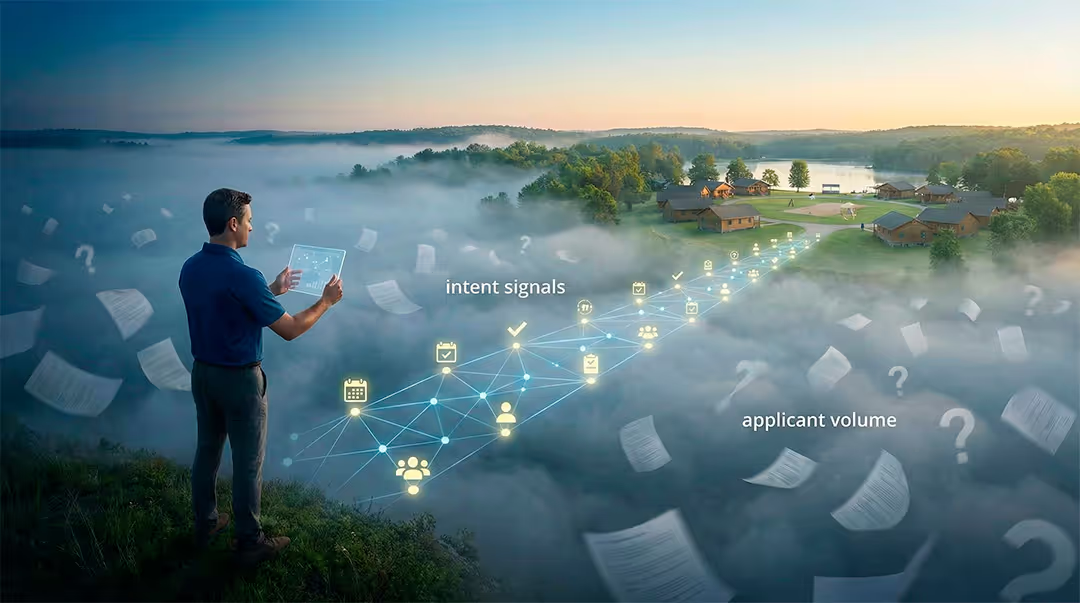
But applicant volume rarely solves the underlying issue. Camps often struggle not because too few people apply, but because directors lack clarity about who is actually committed, available, and likely to show up. Interest exists, but intent remains unclear.
This article explores why seasonal hiring challenges are often misdiagnosed, how visibility gaps quietly shape planning decisions, and why clarity into staff intent matters more than chasing more applications.
The Misdiagnosis of a Hiring Crisis
- Equating applicant volume with hiring success
When staffing feels uncertain, camps often assume the problem is a lack of applicants. More outreach and more job posts seem like the fastest fix. In reality, higher volume rarely translates into better outcomes if directors still don’t know who is truly likely to commit. - Why more applicants don’t reduce uncertainty
A larger applicant pool increases options, but it doesn’t clarify intent. Directors may have more names to review, yet still feel unsure about coverage. Without visibility into availability and follow-through, uncertainty persists regardless of how many people apply. - How volume-focused strategies delay real clarity
Chasing applicants can create the illusion of progress while postponing harder questions. Energy is spent growing the funnel instead of understanding who is dependable. By the time clarity arrives, the season is closer and decisions are more compressed.
What Directors Actually Can’t See
- Unclear intent behind early expressions of interest
Many staff members express interest early without knowing their own availability yet. Directors hear “I’m interested” or “I’d like to come back,” but those signals lack certainty. Without structure, early interest is hard to distinguish from real intent. - Silence and ambiguity mistaken for commitment
When staff don’t respond, that silence is often read optimistically. Past performance and familiarity fill in the gaps, and non-answers quietly become assumed yeses. Over time, ambiguity is treated as confirmation, even though nothing concrete has changed. - Lack of signal around timing and reliability
Beyond yes or no, directors rarely have insight into when someone will decide or how firm that decision is. Timing and reliability stay invisible, making it difficult to sequence recruiting, training, and leadership coverage with confidence.
The Visibility Gap in Seasonal Staffing
- No structured way to track intent early
Before hiring formally begins, most camps rely on informal notes, messages, or memory to track who might return. There is no consistent way to capture intent signals early, which leaves directors piecing together information that was never designed to support planning. - Decisions made without knowing who is truly available
Without early visibility, planning decisions are made in the dark. Directors estimate coverage, training needs, and leadership roles without knowing who is actually available. What looks reasonable on paper often rests on assumptions rather than confirmed signals. - Gaps that stay invisible until the season approaches
Because intent isn’t tracked clearly, gaps don’t surface when there is time to act. They remain hidden until timelines compress and options narrow. By then, the issue isn’t just staffing, but the lack of time to respond thoughtfully.
Why Verbal Commitments Create False Confidence
- “Probably” and “I think so” used as planning inputs
Verbal commitments often sound reassuring in the moment. Phrases like “I’m probably in” or “I think I can come back” are treated as signals, even though they lack specificity. Over time, these soft confirmations become placeholders for real decisions that haven’t happened yet. - Why verbal confirmations fade over time
Seasonal decisions evolve. Schedules change, priorities shift, and options appear. What felt like a commitment months earlier may no longer hold, especially when nothing formal was captured. Without structure, verbal yeses quietly lose reliability as time passes. - The cost of mistaking hope for data
When optimism replaces visibility, planning becomes fragile. Directors move forward believing coverage is secure, only to discover late changes that force reactive hiring. The cost isn’t just operational, it’s the erosion of confidence in every decision built on that hope.
What Measuring Reality Instead of Hope Changes
- Earlier identification of real staffing gaps
When intent is measured instead of assumed, gaps surface sooner. Directors can see which roles are solid, which are uncertain, and which need attention while there is still time to act. This shifts planning from reactive fixes to early, deliberate decisions. - More intentional recruiting instead of last-minute volume
Clear visibility changes how recruiting is approached. Rather than adding applicants “just in case,” directors can focus outreach where gaps truly exist. Recruiting becomes targeted and timely, instead of a late scramble driven by uncertainty. - Stronger confidence in training and scheduling decisions
With clearer signals, training plans and schedules are built on firmer ground. Directors no longer hedge every decision. Confidence replaces contingency planning, allowing teams to prepare with clarity instead of bracing for last-minute surprises.
Visibility as the Foundation of Workforce Planning
- Why forecasting depends on early intent, not applications
Workforce forecasting is strongest when it’s based on early signals, not late-stage applications. Knowing who is likely to return shapes realistic coverage estimates. Without that visibility, forecasts rely on assumptions that only get corrected when it’s harder to respond. - How visibility reduces reactive decision-making
When intent is visible early, decisions slow down in a good way. Directors can plan deliberately instead of reacting to surprises. Visibility creates space to think, prioritize, and adjust before urgency forces rushed choices. - Planning built on signals instead of assumptions
Plans grounded in real signals are more resilient. Training, housing, leadership coverage, and scheduling align more naturally when decisions are informed by what’s known, not hoped for. Visibility turns planning into a confident process rather than a gamble.
Where Seezonee Fits Before Hiring Begins
Before recruiting for volume
Seezonee fits before camps feel pressure to increase applicant volume. By creating early visibility into staff intent, directors can understand real coverage needs first, instead of defaulting to more outreach when uncertainty starts to feel uncomfortable.
Making intent visible without forcing commitment
Early visibility doesn’t mean forcing decisions. Seezonee captures signals while uncertainty still exists, helping directors understand likelihood and timing without turning informal interest into premature commitments or rigid yes-or-no answers.
Supporting planning upstream from hiring systems
Seezonee operates before formal hiring tools are needed. It strengthens planning decisions early, so when ATS or recruitment systems are used, they are fed by clarity instead of unresolved assumptions and last-minute corrections.
Conclusion
Camps don’t struggle with hiring because too few people are interested. They struggle because directors lack visibility into who is actually committed, available, and likely to follow through. Without that clarity, planning relies on assumptions that only surface as problems when timelines tighten.
When intent stays invisible, camps respond by chasing volume. More applicants feel safer than unanswered questions, even if uncertainty remains. Visibility shifts the focus from reacting late to planning early, turning hiring into a more deliberate process.
Camps looking to replace guesswork with clearer signals can join the Seezonee employer waitlist to request early access.
Frequently Asked Questions
Common questions about managing returning staff and seasonal hiring
Why don’t more applicants solve seasonal hiring issues?
More applicants increase volume, but they don’t increase certainty. Camps can still struggle to plan if they lack visibility into who is likely to commit, follow through, or remain available. Without intent clarity, a larger applicant pool adds noise rather than reducing risk.
What does “staff intent visibility” actually mean?
Staff intent visibility means understanding likelihood, timing, and reliability before hiring decisions are finalized. It goes beyond expressions of interest and helps directors see how confident a potential return actually is, reducing reliance on assumptions, memory, or repeated manual follow-ups.
Why is early visibility more valuable than late confirmation?
Early visibility creates time to plan thoughtfully. When camps understand intent sooner, they can adjust recruiting, training, and schedules deliberately. Late confirmation compresses timelines, limits options, and forces reactive decisions that increase stress and reduce the quality of workforce planning overall.
How does lack of visibility affect workforce planning?
Without visibility into staff intent, workforce plans rely on optimism and estimates. Directors hedge decisions, delay action, or overcompensate with volume. When reality finally becomes clear, adjustments are rushed, increasing operational stress and weakening confidence in planning across the season.
When should camps start focusing on staff intent instead of volume?
Camps should focus on staff intent early in the off-season, when uncertainty is highest and decisions remain flexible. Visibility at this stage prevents unnecessary volume-driven recruiting later and helps directors address real gaps before timelines tighten and options become limited.
Related Articles
Continue exploring camp staffing strategies



Why returning staff matter
A practical guide for camp directors who want next season to feel more predictable without pretending seasonal staffing is ever perfect.
- Why returning staff quietly carry more operational weight than we admit
- The real reasons good staff don’t come back, even when they loved camp
- A simple, season-by-season way to think about retention
- Small structural habits that reduce uncertainty over time